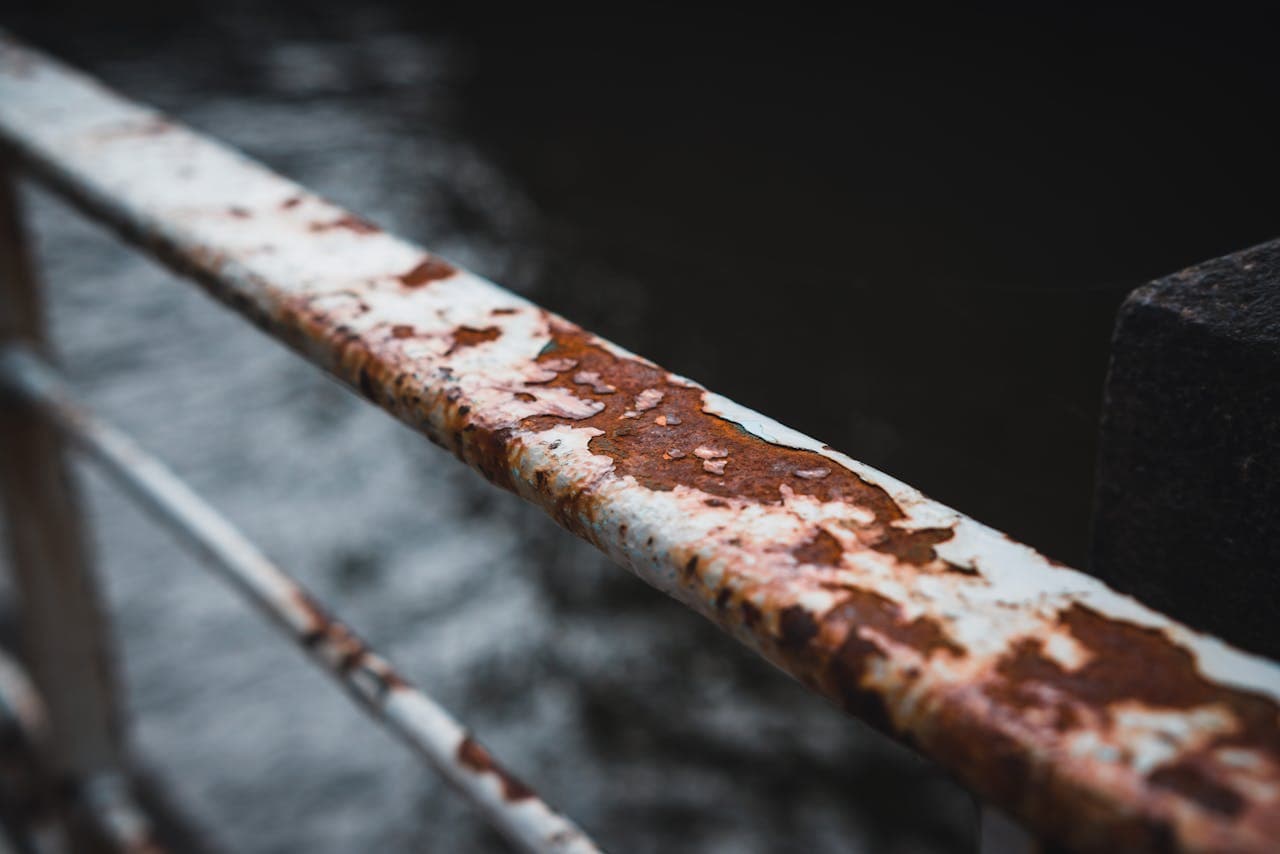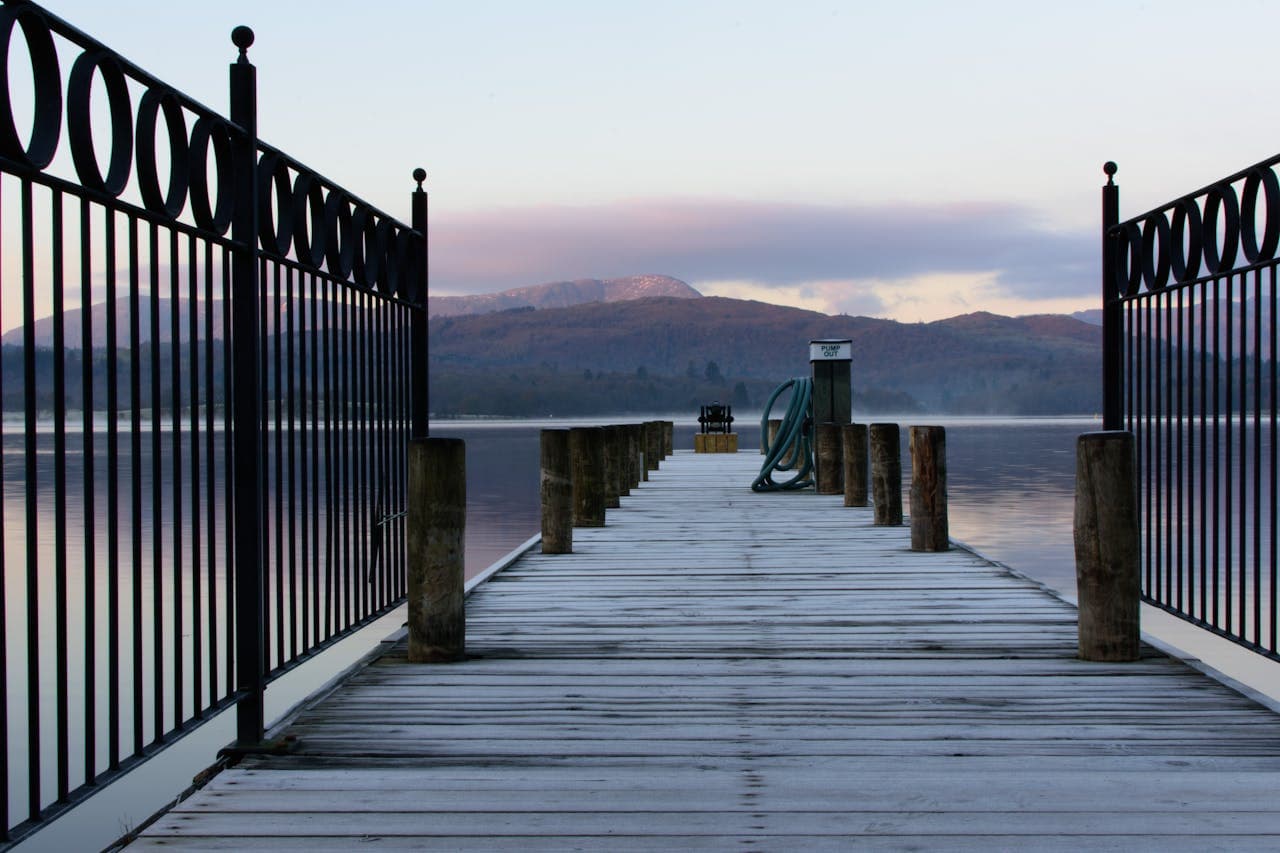
Coastal infrastructure is among the harshest service environments for structural materials. Salt spray, tidal wetting and drying cycles, UV exposure, and biological fouling combine to create a corrosion regime that accelerates the degradation of carbon steel far beyond what inland specifications anticipate. Yet for decades, engineers have continued to specify hot-dip galvanized or painted steel for marine walkways, pier substructures, handrails, cable trays, and platform framing — largely because it was the known quantity.
That is changing. Pultruded fiber reinforced polymer (FRP) profiles are now being specified at increasing rates for coastal and marine infrastructure, not as a novelty material but as a lifecycle-cost decision backed by field data spanning 20 to 30 years.
The Real Cost of Coastal Corrosion
The global cost of corrosion is staggering. NACE International (now AMPP) has estimated that corrosion costs the global economy in excess of $2.5 trillion annually, representing roughly 3.4 percent of world GDP. In marine and coastal infrastructure specifically, corrosion-related maintenance, repair, and premature replacement represent a disproportionately high share of total asset cost.
For a typical galvanized steel walkway or platform in a coastal environment, the protective zinc layer begins to deteriorate within 5 to 15 years depending on the chloride exposure class. Once the base steel is exposed, corrosion accelerates. The standard response — inspection, surface preparation, and recoating with marine-grade protective systems — is expensive not just in material terms but in access cost, scaffold erection, environmental containment for blasting debris, and operational disruption.
Over a 50-year design life, it is common for maintenance costs on coastal steel structures to exceed the original installed cost of the steelwork by a factor of two to four. That is the economic reality that is shifting specification decisions.
FRP Lifecycle Performance in Marine Environments
Pultruded FRP profiles manufactured with corrosion-resistant resin systems — typically isophthalic polyester or vinyl ester matrices reinforced with E-glass rovings and mats — do not corrode electrochemically. They do not rust, pit, or suffer from crevice corrosion. They are immune to the galvanic effects that plague mixed-metal assemblies in salt environments. And they do not require protective coatings to maintain structural integrity over their service life.
This is not a theoretical advantage. FRP structures installed in marine service in the 1990s and early 2000s have now accumulated 25 to 30 years of field exposure data. Inspection programs on these assets consistently show that pultruded FRP profiles retain their mechanical properties and dimensional stability with no evidence of structural degradation that would require remedial intervention.
Profiles manufactured to EN 13706, the European standard for pultruded FRP structural profiles, provide a clear specification framework for minimum mechanical properties, dimensional tolerances, and quality requirements. When combined with ISO 9001-certified manufacturing processes, engineers have a credible qualification path that did not exist 15 years ago.
Weight: A Compounding Structural Advantage
Pultruded E-glass FRP profiles have a density of approximately 1.8 to 2.1 g/cm³, compared with 7.85 g/cm³ for structural steel. That 75 to 80 percent weight reduction has cascading benefits in coastal infrastructure:
Reduced foundation loading. Lighter superstructures mean smaller piles, reduced embedment depth, and lower installation cost, particularly in soft marine soils where pile capacity is expensive to develop.
Easier installation logistics. FRP walkway sections and platform modules can be lifted by smaller cranes or in some cases by hand, reducing the cost and complexity of marine installation where barge-mounted crane time is a major cost driver.
Lower transportation cost. A standard 40-foot container of FRP profiles contains significantly more linear meters of structural section than the same container loaded with steel.
Extended reach for retrofit. When adding walkways, platforms, or access structures to existing marine assets, the reduced dead load often allows connection to existing steelwork without reinforcement, a factor that has driven FRP adoption in offshore platform modification programs.
Case Evidence: Coastal Walkways and Marina Structures
Coastal marina walkways represent one of the clearest use cases for pultruded FRP. The environment combines constant salt exposure, intermittent wetting, pedestrian and light vehicular loading, and an expectation of 25 to 50 year service life with minimal maintenance.
A documented marina walkway project using pultruded FRP profiles demonstrated a total installed cost premium of approximately 15 to 25 percent over galvanized steel. However, the projected 30-year maintenance cost was reduced by more than 60 percent, yielding a net lifecycle saving that justified the upfront investment within the first 8 to 12 years.
This pattern — modest upfront premium, rapid payback through eliminated maintenance — is consistent across numerous coastal FRP projects reported in the literature and in asset owner experience.
Standards and Specification Confidence
One of the historical barriers to FRP adoption was the lack of recognized structural design standards comparable to those available for steel and concrete. That gap has narrowed substantially:
EN 13706 provides minimum property requirements for pultruded profiles in grades E17 and E23, covering flexural, tensile, compressive, and interlaminar shear properties along with dimensional tolerances and test methods.
EUROCOMP Design Code and Handbook offers a design methodology for FRP composite structures.
ASCE Pre-Standard for Load and Resistance Factor Design of Pultruded FRP Structures provides a US-focused design framework.
ISO 9001 certification of manufacturing facilities gives specifiers assurance of process control, traceability, and quality management.
For engineers accustomed to specifying steel to well-established codes, the existence of these standards means that FRP profiles can now be specified with a level of confidence that was not available a decade ago.
Environmental and Sustainability Considerations
The sustainability case for FRP in coastal infrastructure is primarily driven by longevity and reduced maintenance intervention. A structure that does not require recoating, does not generate blasting waste, does not need scaffold access for maintenance, and does not require premature replacement has a materially lower lifetime environmental impact than one that does, regardless of the initial embodied energy comparison.
Additionally, the lower weight of FRP reduces energy consumption in transportation and installation. On projects where helicopter or barge access is required, this weight advantage translates directly to lower fuel consumption and reduced carbon emissions during construction.
When FRP Is the Right Choice for Coastal Projects
Pultruded FRP profiles are most compelling for coastal infrastructure when the chloride exposure environment is severe enough that steel maintenance cycles will be frequent and expensive, when access for maintenance is difficult or operationally disruptive, when the asset design life is 25 years or longer, and when weight reduction enables structural or logistical benefits.
Steel remains appropriate where very high impact resistance is required, where fire rating requirements cannot be met by available FRP systems, or where the environment is mild enough that maintenance costs remain low over the asset life.
Conclusion
The shift from steel to pultruded FRP in coastal infrastructure is not driven by material novelty. It is driven by 30 years of field evidence, improving design standards, and the increasingly clear lifecycle cost arithmetic. For asset owners and engineers responsible for structures in aggressive marine environments, FRP has moved from an alternative material to a serious default candidate — one that delivers lower total cost of ownership, reduced maintenance burden, and longer effective service life.