The Passivhaus standard sets the most rigorous energy performance requirements in mainstream building certification. Among its criteria, the demands placed on window systems are particularly exacting: installed window U-values must typically fall below 0.85 W/m²·K, and frame components must minimize thermal bridging to a degree that conventional aluminium frames struggle to achieve even with thermal break technology. Pultruded fiber reinforced polymer (FRP) window frames are emerging as one of the most technically credible solutions to this challenge.
The Passivhaus Window Challenge
Passivhaus certification requires that the building envelope limit space heating demand to no more than 15 kWh/m² per year. In practical terms, this means every component of the envelope must perform at a level where thermal bridging is eliminated or minimized to the point of insignificance. Windows — which combine transparent elements, opaque frames, edge spacers, and seals in a single assembly — are among the most thermally complex components in the envelope.
The Passivhaus Institut (PHI) certifies window systems that meet its criteria for installed thermal performance. To achieve PHI certification, the complete window — frame, glazing, spacer, and installation detail — must demonstrate that it will not create a weak point in the surrounding insulated wall assembly. The frame U-value (U_f) is a critical parameter in this calculation, and it is here that frame material selection has its greatest impact.
Why Aluminium Frames Fall Short
Aluminium has a thermal conductivity of approximately 160 W/m·K. Even with polyamide thermal break strips — the standard approach in commercial aluminium fenestration — the effective frame U-value typically lands in the 1.8 to 3.5 W/m²·K range for conventional systems, and 1.2 to 1.8 W/m²·K for high-performance thermally broken designs.
Achieving frame U-values below 1.0 W/m²·K with aluminium requires increasingly complex multi-chamber thermal break geometries, polyurethane foam insulation inserts, and sophisticated profile engineering. These solutions add cost, manufacturing complexity, and potential failure modes at the interfaces between conductive and insulating elements.
The fundamental problem is that aluminium is being asked to do something its physics resist: act as an insulator. Every design iteration is a workaround for the material's intrinsic conductivity.
FRP: Insulation as a Material Property
Pultruded FRP window frame profiles have a thermal conductivity of approximately 0.3 W/m·K. That is roughly 500 times lower than aluminium. This is not achieved through added insulation components or thermal break strips — it is an inherent property of the glass-fiber-reinforced polymer matrix.
The practical result is that pultruded FRP frames routinely achieve frame U-values in the 0.8 to 1.2 W/m²·K range in standard profile configurations, without requiring supplementary insulation inserts. With optimized multi-chamber profile design and appropriate gasket systems, FRP fenestration systems can reach frame U-values below 0.8 W/m²·K — comfortably within Passivhaus territory.
This matters because the frame's thermal performance is not dependent on the integrity of a thermal break joint. The entire cross-section is insulating. There is no conductive short circuit waiting to emerge if a thermal break strip degrades, shifts, or is bridged by fasteners.
Whole-Window U-Value Performance
Passivhaus window certification evaluates the whole-window U-value (U_w), which combines the frame U-value (U_f), the glazing center-of-pane U-value (U_g), and the linear thermal transmittance at the glass edge (psi_g). The calculation follows ISO 10077-1 and ISO 10077-2 methodology.
For a typical Passivhaus-grade window assembly:
Glazing: Triple-pane insulated glass units with two low-emissivity coatings and argon or krypton fill achieve center-of-pane U-values of 0.5 to 0.7 W/m²·K.
Frame: Pultruded FRP frames contribute U_f values of 0.8 to 1.1 W/m²·K in standard configurations.
Spacer: Warm-edge spacer bars with stainless steel or composite construction reduce psi_g to 0.030 to 0.035 W/m·K.
The resulting whole-window U-value for an FRP-framed, triple-glazed system typically falls in the 0.7 to 0.85 W/m²·K range — meeting or exceeding the Passivhaus requirement without the profile complexity needed to push aluminium systems to equivalent performance levels.
Dimensional Stability and Long-Term Seal Performance
Passivhaus buildings rely on sustained airtightness over their operational life. Window frames that expand and contract significantly with temperature cycling place repeated stress on seals and gaskets, eventually compromising airtightness.
Pultruded FRP has a coefficient of thermal expansion (CTE) of approximately 6 to 10 × 10⁻⁶/°C in the longitudinal direction. Glass has a CTE of approximately 9 × 10⁻⁶/°C. This close match means that FRP frames and glazing units move at similar rates under thermal loading, placing less cyclic stress on the seal interface than either aluminium (CTE approximately 23 × 10⁻⁶/°C) or PVC (CTE approximately 70 to 80 × 10⁻⁶/°C).
For Passivhaus certification — where the building must demonstrate airtightness of no more than 0.6 air changes per hour at 50 Pa pressure — this dimensional compatibility is not a marginal benefit. It is a durability factor that contributes to sustained certification compliance over the building's 25 to 50 year operational life.
Structural Performance: Slim Profiles, Larger Glazing Areas
Pultruded FRP window profiles deliver tensile strength exceeding 240 MPa and flexural strength in the 200 to 350 MPa range, depending on laminate design. This structural capacity allows frame sections to be slimmer than PVC equivalents while maintaining adequate stiffness for large window openings.
In Passivhaus design, maximizing glazing area on south-facing elevations is a key strategy for capturing passive solar gains during heating months. Slimmer frame profiles increase the glass-to-frame ratio, which improves both daylight and solar gain. FRP enables this without the thermal penalty of aluminium and without the structural limitations of PVC at large spans.
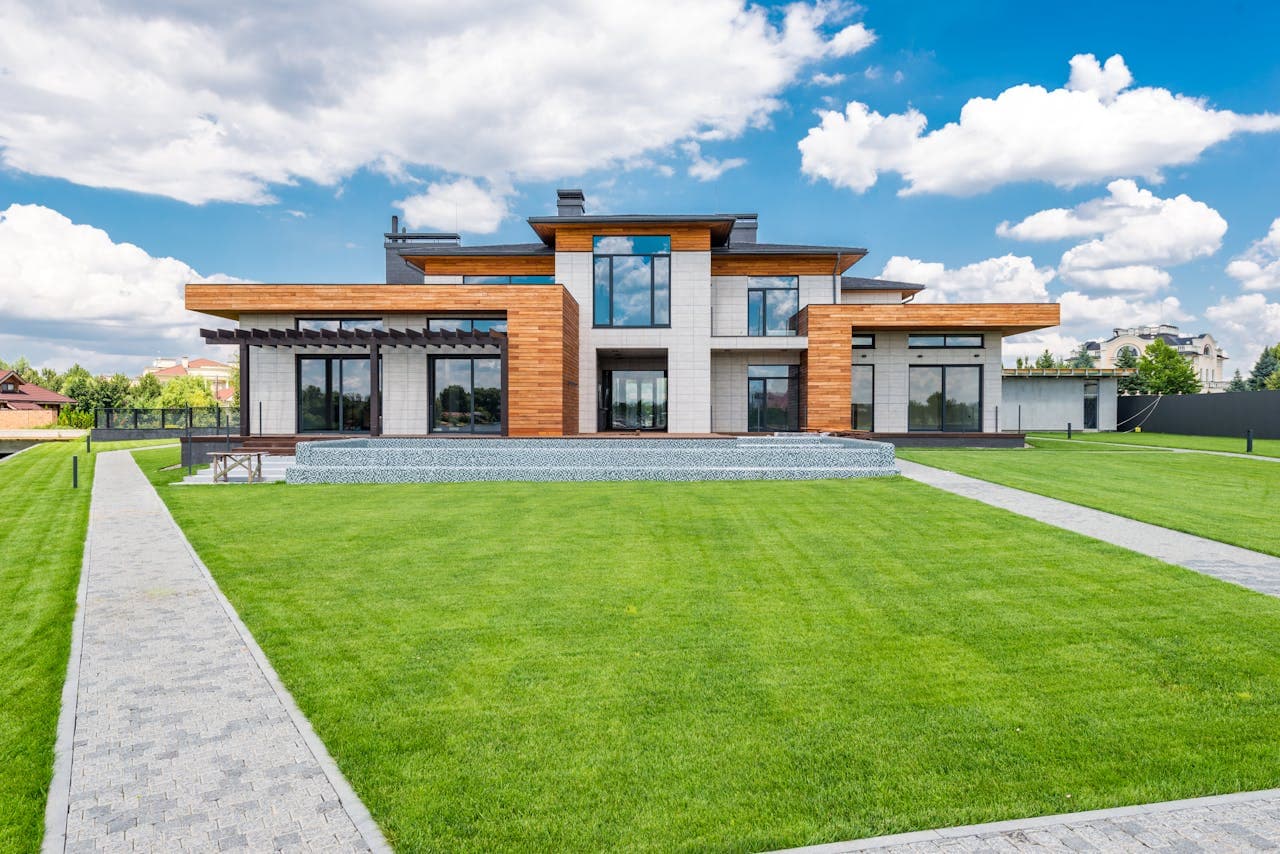
A residential fenestration case study demonstrated that FRP-framed window systems achieved both the thermal performance required for passive-standard compliance and the slim sight lines preferred by the architectural design team — a combination that would have required significantly more complex engineering in aluminium.
Energy Savings: Quantifying the Frame Contribution
The energy impact of frame material selection is often underestimated because specifiers focus on center-of-pane glazing values. But in a well-insulated Passivhaus wall assembly with U-values of 0.10 to 0.15 W/m²·K, even a moderately conductive frame at 1.5 W/m²·K represents a local thermal weakness that is 10 to 15 times less insulating than the surrounding wall.
Replacing an aluminium frame (U_f = 1.5 W/m²·K with thermal break) with a pultruded FRP frame (U_f = 0.9 W/m²·K) on a typical residential window of 1.5 m² with 30 percent frame fraction reduces heat loss through the frame by approximately 40 percent. Across a full Passivhaus dwelling with 20 to 30 m² of window area, the cumulative frame heat loss reduction translates to measurable energy savings that contribute directly to meeting the 15 kWh/m² annual heating demand limit.
Manufacturing and Certification Pathway
Pultruded FRP fenestration profiles are manufactured in a continuous process that produces consistent cross-sections with repeatable mechanical and thermal properties. This process consistency is important for Passivhaus certification, which requires that production windows match the thermal performance demonstrated in the certification test.
Manufacturers operating under ISO 9001 quality management systems with documented fiber-resin ratios, pull speeds, and cure temperature profiles can provide the traceability that certification bodies expect. Profiles are tested to EN 12667 for thermal conductivity and can be modeled using ISO 10077-2 finite element methodology for frame U-value calculation.
Certified Performance: Fengdu Passive GFRP 90 Series
The theoretical advantages described above are validated by actual Passive House Institute certification. The Fengdu Passive GFRP 90 Series — a pultruded glass fiber reinforced polymer window frame system — holds PHI Component Certificate 2491wi03 for the cool, temperate climate zone, achieving Passive House efficiency class phB.
The certified performance data confirms what the material physics predict:
Frame U-value (U_f): 0.78 W/(m²·K) across all frame sections — head, jamb, bottom, and flying mullion — with frame widths of 109 mm (standard sections) and 133 mm (mullion). This uniform U_f of 0.78 across every section means there is no weak link in the frame assembly.
Glazing edge thermal bridge (Ψ_g): 0.023 W/(m·K) using Swisspacer Ultimate warm-edge spacer with butyl secondary seal — significantly below the 0.030 to 0.035 range typical of conventional systems.
Whole-window U-value (U_W): 0.78 W/(m²·K) with U_g = 0.70 glazing, meeting the Passivhaus comfort criterion of U_W ≤ 0.80. With higher-performance glazing, the system reaches U_W = 0.65 W/(m²·K).
Installed performance: U_W,installed ranges from 0.82 to 0.84 W/(m²·K) depending on wall construction type (EIFS, formwork blocks, or lightweight timber), all within the 0.85 W/(m²·K) installed limit.
Temperature factor (f_Rsi): 0.77 to 0.78 across all sections, well above the 0.70 hygiene threshold — confirming no condensation risk at the frame interior surface.
The frame construction uses a fiberglass reinforced profile (0.30 W/(m·K)) insulated with Kooltherm (0.022 W/(m·K)) and PE foam (0.038 W/(m·K)), combined with triple glazing at 48 mm pane thickness (4/18/4/18/4) and 19 mm rebate depth.
[Download the full PHI certificate (PDF)](/downloads/phi-certificate-gfrp-90-series-2491wi03.pdf)
Conclusion
Pultruded FRP window frames achieve Passivhaus certification not through elaborate engineering workarounds but through fundamental material properties. Low thermal conductivity, close CTE compatibility with glass, structural capacity for slim profiles, and manufacturing consistency for repeatable certification all derive from the same glass-fiber-reinforced polymer composite system.
For architects and engineers specifying windows for Passivhaus or other high-performance envelope standards, FRP deserves evaluation not as an exotic alternative but as a material whose physics are naturally aligned with what the standard demands. The thermal performance is inherent, the structural capacity is proven, and the certification pathway is established.